Yang Style Tai Chi 108 Movements: A Comprehensive Guide
Numerous resources detail the 108 movements‚ including downloadable PDF guides listing postures in English and Chinese‚ tracing back to Yang Lu-chan’s original form.
Historical Origins of Yang Style Tai Chi
Yang Style Tai Chi’s roots trace back to the 19th century‚ specifically to Yang Lu-chan‚ who learned from the Chen family‚ the originators of Tai Chi Chuan. He brought the art to Beijing and adapted it‚ creating what became known as Yang Style.
Initially‚ Yang Lu-chan’s form consisted of a comprehensive 127 postures – the “Old Yang Style.” Over time‚ this evolved into the more commonly practiced 108 movements‚ documented in various PDF guides available today. These guides often include both Chinese names and English translations of each posture.
Later‚ further simplification occurred‚ notably with Cheng Man-Ching reducing the form to 37 movements‚ offering a more accessible practice. However‚ the 108 form remains a cornerstone‚ representing a rich lineage and a detailed exploration of Tai Chi principles‚ readily available for study through digital resources.
Yang Lu-chan and the Development of the Form
Yang Lu-chan’s pivotal role involved learning the Chen style from Chen Changxing and subsequently adapting it for wider accessibility. He emphasized practical self-defense while incorporating philosophical principles. His initial form‚ the Old Yang Style with 127 postures‚ laid the foundation for the later 108-movement version.
The transition to 108 movements involved streamlining and refining the original sequence‚ making it more manageable for students. Numerous PDF resources now detail this form‚ offering step-by-step instructions and explanations of each posture’s application. These documents often highlight the importance of correct alignment and Qi circulation.
Yang Lu-chan’s legacy is preserved through these detailed guides‚ allowing practitioners to connect with the historical roots of the style. His influence continues to shape Yang Style Tai Chi‚ emphasizing both health benefits and martial applications‚ readily accessible through modern documentation.
The Evolution from 108 to Simplified Forms
Following Yang Lu-chan‚ subsequent generations‚ notably Yang Cheng Fu‚ continued refining the form. The 108 movements‚ while comprehensive‚ proved lengthy for some. This led to the development of shorter forms‚ like the popular 37-movement set created by Cheng Man-Ching in the 1930s‚ designed for accessibility.
Numerous PDF guides document these variations‚ showcasing the evolution of the style. These resources often compare and contrast the 108 form with its simplified counterparts‚ highlighting the core principles retained in each version. Practitioners can find detailed breakdowns of movement sequences online.
The availability of these PDF resources allows students to explore the lineage of Yang Style Tai Chi‚ understanding how the form adapted to different needs and contexts. This evolution demonstrates the style’s enduring relevance and adaptability.

Understanding the Core Principles
PDF guides emphasize Yin and Yang‚ Qi circulation‚ and proper alignment as foundational to the 108 movements‚ reflecting Chinese philosophical concepts.
Yin and Yang in Tai Chi Practice
Central to Yang Style Tai Chi‚ and detailed within PDF resources outlining the 108 movements‚ is the principle of Yin and Yang. This ancient Chinese philosophy posits that all phenomena exist as inseparable‚ often contradictory‚ opposites.
These aren’t opposing forces in conflict‚ but rather complementary aspects of a unified whole. In Tai Chi‚ Yin represents qualities like softness‚ yielding‚ and inward energy‚ while Yang embodies hardness‚ expansion‚ and outward force. The 108 form isn’t simply a sequence of movements; it’s a dynamic interplay between these forces.
Each posture transitions between Yin and Yang‚ cultivating balance and harmony. PDF guides often illustrate how movements begin with a Yang expression‚ then seamlessly flow into a Yin state‚ and back again. Understanding this duality is crucial for proper execution and experiencing the full benefits of the practice‚ promoting internal equilibrium.
The Role of Qi (Chi) Circulation
Fundamental to Yang Style Tai Chi‚ as explained in PDF guides detailing the 108 movements‚ is the cultivation and circulation of Qi (Chi)‚ often translated as “life energy.” The form isn’t merely physical exercise; it’s a method for unlocking and guiding this vital force throughout the body.
Slow‚ deliberate movements‚ coupled with focused intention‚ open energy pathways – meridians – allowing Qi to flow freely. The 108 postures are designed to stimulate these pathways‚ removing blockages and promoting overall health. PDF resources often emphasize the importance of diaphragmatic breathing to enhance Qi circulation.
Proper alignment and relaxed posture‚ detailed within instructional materials‚ are essential for optimal Qi flow. Consistent practice‚ guided by a PDF or instructor‚ strengthens the body’s ability to generate‚ store‚ and utilize Qi‚ leading to increased vitality and well-being.
Importance of Proper Posture and Alignment

Detailed PDF guides for the Yang Style 108 movements consistently stress the critical role of correct posture and alignment. These aren’t aesthetic concerns; they are foundational to unlocking the form’s health benefits and maximizing Qi circulation. Incorrect alignment can impede energy flow and potentially lead to injury.
The form emphasizes a relaxed‚ upright spine‚ a “suspended head” – imagining a string pulling upwards – and a gentle tuck of the tailbone. PDF resources often include diagrams illustrating proper skeletal alignment in key postures. Maintaining a neutral spine prevents strain and allows for efficient movement.
Weight distribution‚ often described in instructional PDFs‚ should be balanced and centered. Avoid locking joints; maintain a slight bend in the knees and elbows. Consistent attention to these details‚ guided by a qualified instructor or detailed PDF‚ builds a strong foundation for practice.

The 108 Movements: A Breakdown
PDF resources meticulously detail each of the 108 movements‚ offering sequential instructions and visual guides for practitioners to learn and refine their form.
Commencing Form (Preparation)
The initial phase‚ detailed in many PDF guides‚ centers on Chan Si Jing (Silk Reeling Standing)‚ establishing a foundation of relaxed awareness. Practitioners gently settle into a posture‚ grounding through the feet and aligning the spine.
These guides emphasize slow‚ deliberate movements‚ focusing on sinking the Qi (energy) and cultivating a sense of centeredness. Breathing is coordinated with the movements‚ promoting calmness and internal focus.
Variations exist within the 108 form‚ but the core principle remains consistent: a mindful preparation for the subsequent movements. PDF resources often include diagrams illustrating proper hand positions and body alignment‚ aiding in correct execution.
This preparatory stage isn’t merely physical; it’s a mental and energetic alignment‚ setting the tone for the entire practice. A solid commencing form is crucial for a flowing and effective Tai Chi experience.
Parting the Wild Horse’s Mane – Variations & Benefits
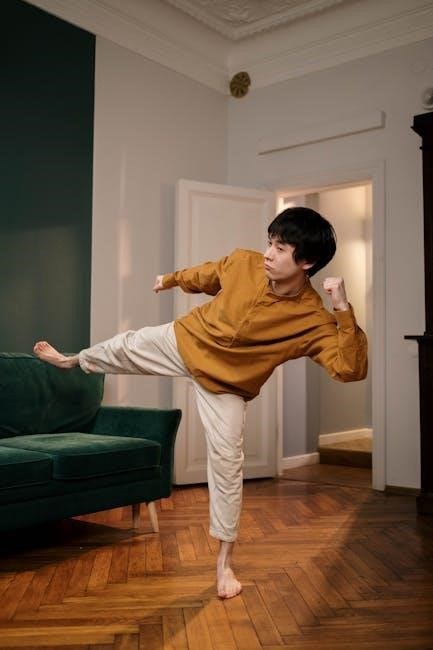
This foundational movement‚ extensively illustrated in PDF guides‚ involves a gentle‚ circular motion resembling parting a horse’s mane. It’s repeated multiple times within the 108 form‚ often three times consecutively‚ building coordination and internal power.
Variations exist‚ with some lineages emphasizing a more outward spiraling action‚ while others focus on a deeper sinking of the Qi. PDF resources often detail these nuances‚ providing visual cues for correct form.
Benefits include improved shoulder mobility‚ enhanced waist rotation‚ and the development of Peng energy – a yielding‚ resilient force; The movement cultivates a sense of connectedness throughout the body.
Practitioners learn to maintain a relaxed posture while generating power from the core. Mastering this movement is crucial for transitioning smoothly into subsequent forms‚ as detailed in comprehensive PDF instructional materials.
Ward Off Left/Right
Ward Off Left and Right‚ meticulously documented in available PDF guides‚ are fundamental self-defense techniques within the Yang style 108 form. These movements simulate deflecting an incoming attack‚ utilizing a circular blocking motion with the arms.
PDF resources emphasize the importance of maintaining a stable stance and coordinated body movement. The left and right variations are performed sequentially‚ building a sense of balance and responsiveness. Proper execution requires a relaxed yet focused intention.
Benefits include strengthening the arms and shoulders‚ improving coordination‚ and cultivating a defensive awareness. The movements promote the circulation of Qi‚ enhancing internal energy flow.
Detailed PDF instructions often highlight subtle differences in hand positioning and body alignment for each side‚ ensuring correct technique. Mastering these forms is essential for understanding the martial applications of Tai Chi.
Roll Back
Roll Back‚ a core technique within the Yang style 108 form‚ is thoroughly illustrated in numerous PDF guides. It represents yielding to an opponent’s force while simultaneously neutralizing their attack and preparing for a counter-offensive.
PDF resources detail the importance of a relaxed waist and coordinated body movement‚ allowing the opponent’s energy to be redirected. The technique involves a gentle backward stepping motion combined with a circular arm movement.
Benefits include developing sensitivity to an opponent’s force‚ improving balance‚ and cultivating a yielding yet resilient spirit. It’s a crucial element in neutralizing aggression.
Detailed PDF instructions often emphasize maintaining a stable stance and avoiding tension. Correct execution requires precise timing and a focused intention. Mastering Roll Back is vital for understanding the defensive principles of Tai Chi.
Press
Press‚ a fundamental movement in the Yang style 108 form‚ is extensively documented in available PDF guides. It follows Roll Back‚ applying controlled pressure to disrupt an opponent’s balance and structure. The technique isn’t about brute force‚ but rather a focused‚ penetrating energy.
PDF resources emphasize the importance of maintaining a relaxed yet firm posture‚ utilizing the entire body’s weight behind the movement. Correct alignment and coordinated breathing are crucial for effective execution.
Benefits include strengthening the core‚ improving structural integrity‚ and developing the ability to deliver focused energy. It’s a key component of Tai Chi’s self-defense applications.
Detailed PDF instructions often highlight the subtle nuances of hand positioning and body mechanics. Mastering Press requires consistent practice and a deep understanding of Tai Chi principles.
Push
Push‚ succeeding Press in the Yang style 108 form‚ is thoroughly illustrated in numerous PDF guides. It’s a continuation of the energy initiated in Press‚ extending outward to maintain control and potentially unbalance an opponent. The movement emphasizes yielding and redirecting force‚ rather than meeting it head-on.
PDF resources detail the importance of a stable stance and a relaxed upper body‚ allowing for smooth‚ continuous movement. Proper alignment ensures the energy flows efficiently through the limbs.
Benefits include developing sensitivity to an opponent’s energy‚ improving coordination‚ and strengthening the legs and core. It’s a vital component of Tai Chi’s martial applications.
Detailed PDF instructions often showcase variations in hand positioning and body angles‚ adapting to different scenarios. Consistent practice is key to mastering this nuanced technique.

Key Sections & Transitions
PDF guides highlight crucial sections like Single Whip and Cloud Hands‚ detailing smooth transitions between the 108 movements for fluid‚ connected practice.
Single Whip
Single Whip‚ a cornerstone of the Yang Style 108 form‚ is extensively documented in available PDF resources. These guides often break down the movement into sequential steps‚ emphasizing proper alignment and weight shifting. The name derives from the imagery of holding a whip‚ extending and retracting with controlled power.
PDFs illustrate variations in hand positions and footwork‚ catering to different levels of experience. Detailed explanations focus on coordinating breath with movement‚ enhancing internal energy circulation. Practitioners learn to generate force from the core‚ extending through the limbs‚ while maintaining a relaxed and centered posture. The transition into Single Whip‚ and from it‚ are also often highlighted‚ showing how it connects to the preceding and following forms.
Many PDFs include diagrams and visual aids to clarify the complex body mechanics involved‚ making it easier to understand and replicate the movement accurately. Mastering Single Whip is considered essential for developing both physical skill and a deeper understanding of Tai Chi principles.
Cloud Hands – Form and Application
Cloud Hands‚ a visually striking and fundamentally important section of the Yang Style 108 form‚ is thoroughly detailed in numerous PDF guides. These resources emphasize the circular‚ flowing movements‚ resembling hands moving through clouds. PDFs often break down the technique into smaller‚ manageable steps‚ focusing on maintaining a relaxed‚ yet connected‚ structure.
The application of Cloud Hands isn’t merely aesthetic; PDFs explain its martial roots‚ demonstrating how the movement can be used for deflecting and redirecting an opponent’s force. Emphasis is placed on whole-body movement‚ coordinated with breath‚ and maintaining a stable center. Variations in speed and height are also illustrated.
Many PDFs include explanations of the internal principles behind Cloud Hands‚ such as cultivating peng (ward-off) energy and developing sensitivity to an opponent’s intentions. Visual aids and diagrams clarify the intricate footwork and hand patterns‚ aiding in accurate replication.
Single Push
Single Push‚ a key component of the Yang Style 108 form‚ is comprehensively documented in available PDF guides. These resources detail the precise alignment and weight shifting required for effective execution. PDFs often illustrate the movement’s connection to previous and subsequent forms‚ emphasizing the continuous flow of energy.
The PDFs highlight the importance of maintaining a relaxed‚ yet rooted‚ stance while extending the hand forward with focused intention. They explain how Single Push embodies the principle of releasing force‚ rather than generating it through muscular tension. Variations in hand position and body angle are also explored.
Beyond the physical form‚ PDFs delve into the martial application of Single Push‚ demonstrating its use in neutralizing an opponent’s attack and creating an opening for a counter-strike. Diagrams and step-by-step instructions aid in understanding the subtle nuances of this powerful technique.
Cross Hands
Cross Hands‚ a visually striking and strategically important movement within the Yang Style 108 form‚ is thoroughly detailed in numerous PDF guides. These resources provide a breakdown of the hand positions‚ body alignment‚ and weight distribution crucial for correct execution. PDFs often include multiple perspectives and annotated images to clarify the complex choreography.
The PDF documentation emphasizes the circular motion inherent in Cross Hands‚ highlighting its role in deflecting and redirecting incoming force. They explain how the movement cultivates internal strength and coordination‚ while simultaneously promoting relaxation and balance. Variations in speed and amplitude are also explored.
Furthermore‚ PDFs often illustrate the martial applications of Cross Hands‚ demonstrating its effectiveness in close-quarters combat. They showcase how the movement can be used to control an opponent’s limbs‚ disrupt their balance‚ and create opportunities for offensive maneuvers.

Resources for Learning & Practice
Accessible PDF guides detailing the 108 movements are readily available online‚ complementing instruction from qualified Yang Style Tai Chi teachers and schools.
Finding a Qualified Yang Style Instructor
Locating a skilled instructor is paramount for mastering the intricacies of the Yang Style 108 movements. While PDF guides and online resources offer a foundational understanding of the form‚ they cannot replicate the personalized correction and nuanced guidance a teacher provides.
Seek instructors with demonstrable lineage tracing back to recognized Yang Style masters. Inquire about their training background‚ years of experience‚ and teaching philosophy. A qualified instructor will emphasize proper posture‚ alignment‚ and qi circulation‚ crucial elements often missed when learning solely from written materials.
Observe classes before committing to ensure the teaching style resonates with your learning preferences. A good instructor will patiently explain each movement‚ offering modifications for varying physical abilities. Don’t hesitate to ask questions and seek clarification on any aspect of the form. Remember‚ a strong foundation built with expert guidance is invaluable for safe and effective practice.
Utilizing PDF Guides and Online Resources
Numerous PDF guides detailing the Yang Style 108 movements are readily available online‚ offering a convenient supplement to in-person instruction. These resources often present the sequence of postures with accompanying descriptions‚ aiding in memorization and self-practice. However‚ it’s crucial to approach them with discernment.
Verify the source’s credibility; prioritize guides originating from established Tai Chi schools or experienced practitioners. Be aware that variations exist within the Yang Style‚ so understanding the lineage of the presented form is important. Online videos can further enhance understanding‚ allowing you to visually observe the movements.
Remember that PDFs and videos are best utilized as learning aids‚ not replacements for a qualified instructor. They can help reinforce concepts learned in class and facilitate independent practice‚ but cannot provide the personalized feedback necessary for correcting errors and optimizing technique.
Cheng Man-Ching 37 Form – A Related Practice
While focusing on the Yang Style 108 movements‚ it’s beneficial to understand the related Cheng Man-Ching 37 Form. Developed in the 1930s by Yang Cheng Fu’s disciple‚ Cheng Man-Ching‚ this form distills the essence of the 108 movements into a more manageable sequence. PDF resources detailing the 37 form are also widely available online‚ offering a comparative study opportunity.
The 37 form serves as an excellent entry point for beginners‚ providing a foundation in Tai Chi principles before tackling the complexity of the 108. It emphasizes internal power and mindful movement‚ mirroring the core tenets of the longer form. Many practitioners use it as a warm-up or cool-down routine.
Exploring both forms deepens understanding of Yang Style Tai Chi‚ revealing the underlying principles expressed in different ways. It’s a testament to the adaptability and enduring legacy of this martial art.
The Significance of the Old Yang Style (127 Postures)
The Old Yang Style‚ comprising 127 postures‚ represents the original form taught by Yang Lu-chan. PDF documents cataloging these movements exist‚ offering a glimpse into the art’s historical roots. Understanding this lineage provides context for the later development of the 108 and subsequent simplified forms. It showcases the evolution of the practice over generations.
While the 108 form is widely practiced‚ the 127 posture version holds significant cultural and martial importance. It embodies a more complete expression of Yang Lu-chan’s teachings‚ including a wider range of techniques and applications. Studying its structure illuminates the principles behind the condensed versions.
Accessing resources detailing the 127 postures‚ even without attempting to learn the entire form‚ enriches appreciation for the depth and complexity of Yang Style Tai Chi.

Advanced Considerations
Detailed PDF guides reveal dragon and azure symbolism‚ enriching practice beyond movements‚ connecting to philosophical roots and daily life applications.
The Dragon and Azure Symbolism in Yang Style
Yang is intrinsically linked to heaven‚ maleness‚ light‚ activity‚ and penetration‚ concepts vividly represented through the dragon and the color azure within the 108 movements. PDF resources detailing the form often highlight this symbolism‚ explaining how each posture embodies these qualities. The dragon‚ a powerful and benevolent creature in Chinese culture‚ signifies strength and transformation‚ mirroring the practitioner’s journey.
Azure‚ a vibrant shade of blue‚ represents the sky and vastness‚ symbolizing limitless potential and spiritual growth. These symbols aren’t merely aesthetic; they’re integral to understanding the energetic principles at play. Practitioners utilizing PDF guides can delve deeper into how specific movements channel Yang energy‚ fostering balance and vitality. The unbroken line‚ also associated with Yang‚ signifies continuous‚ assertive action‚ reflected in the flowing‚ yet firm‚ execution of the form. Understanding this symbolism elevates practice beyond physical exercise‚ transforming it into a profound meditative experience.
Applying Tai Chi Principles to Daily Life
Yang Style Tai Chi‚ even when learned through a PDF guide detailing the 108 movements‚ extends far beyond the practice space. The core principles of balance‚ coordination‚ and mindful movement translate seamlessly into everyday activities. Cultivating awareness of posture and alignment‚ emphasized in the form‚ improves physical well-being and reduces strain.
The emphasis on relaxed‚ flowing movements fosters a sense of calm and centeredness‚ aiding in stress management. Practitioners can apply the concept of “yielding” – redirecting force rather than resisting – to navigate challenging situations with greater ease. PDF resources often include notes on integrating these principles into daily routines. By embodying the principles of Yin and Yang‚ individuals can achieve greater harmony in their interactions and approach life with increased resilience and mindful presence‚ enhancing overall quality of life.
Benefits of Consistent Practice
Consistent engagement with the Yang Style 108 movements‚ even utilizing a PDF guide for self-study‚ yields profound benefits. Physical improvements include enhanced balance‚ flexibility‚ and coordination‚ alongside increased muscle strength and improved cardiovascular health. The slow‚ deliberate movements promote joint lubrication and range of motion.
Beyond the physical‚ regular practice cultivates mental clarity‚ reduces stress‚ and fosters a sense of inner peace. The mindful focus required during the form enhances concentration and promotes emotional regulation. Accessing the form through PDF resources allows for convenient‚ self-paced learning. Over time‚ practitioners experience increased energy levels‚ improved sleep quality‚ and a greater connection to their bodies‚ leading to a more balanced and fulfilling lifestyle.