
Purpose and Scope of Barnes Reloading Manual
The Barnes Reloading Manual outlines precise load data, safety guidelines, and best practices for handloading. It serves both novices and seasoned reloaders, offering step‑by‑step instructions, bullet‑specific tables, and troubleshooting tips to ensure consistent, reliable performance. shooters.!
Target Audience and Intended Use
Designed for a broad spectrum of reloaders, the Barnes Reloading Manual serves as a definitive reference for anyone who seeks to create reliable, high‑performance ammunition. Its primary audience includes:
- Novice handloaders who need clear, step‑by‑step guidance on selecting bullets, powders, and primers.
- Intermediate shooters who want to fine‑tune velocity, accuracy, and consistency for hunting or target competition.
- Advanced reloading professionals who require comprehensive data tables, pressure limits, and troubleshooting insights to push the envelope safely.
- Gun‑safety advocates who value the manual’s emphasis on load caps, safe‑loading practices, and equipment calibration.
- Custom reloading enthusiasts who experiment with proprietary powders, case modifications, and advanced primer designs to achieve niche ballistic goals.
The manual’s intended use is multifaceted: it provides accurate load data for Barnes bullets, offers safety protocols, and serves as a troubleshooting guide. By following its recommendations, users can achieve optimal performance while maintaining the highest safety standards.
Readers will also find detailed guidance on reloading for specific shooting disciplines such as hunting and target shooting. The manual emphasizes consistent case preparation and primer selection to achieve optimal velocity and accuracy!!!

Editions and Publication History
The Barnes Reloading Manual has evolved through four editions, each refining load data and safety guidelines. Published by Barnes Bullets, the series began withEdition 1, expanded in Edition 2,and reached its current form in Edition 4, reflecting decades of user feedback and ballistic research.!!!!!
Evolution from Edition 1 to Edition 4
Edition 1 laid the groundwork with basic load tables for Barnes bullets, emphasizing safety margins and primer compatibility. Early feedback highlighted the need for more precise powder curves and a broader bullet selection, leading to Edition 2, which added velocity‑time data, updated maximum pressure limits, and a primer‑compatibility matrix that clarified which primers worked best with each cartridge.
Edition 3 expanded the manual’s scope by integrating advanced ballistic modeling, offering velocity‑time curves for high‑performance rounds and a new section on barrel life. It also introduced dedicated load data for X‑Coated bullets, complete with cautionary notes on maximum charge limits and a discussion of how the coating affects pressure dynamics.
Edition 4, the current standard, consolidates all prior revisions into a single, user‑friendly volume. It features an expanded database covering over 200 bullet weights, updated powder manufacturers’ data, and a troubleshooting guide that addresses misfires, excessive pressure, and accuracy issues. The manual now includes a digital companion app reference, allowing reloaders to cross‑check load data on the go.
Throughout its evolution, the Barnes Reloading Manual has maintained a commitment to safety, accuracy, and continuous improvement based on real‑world testing, ensuring that both novice and experienced handloaders have reliable, up‑to‑date information for every cartridge type.
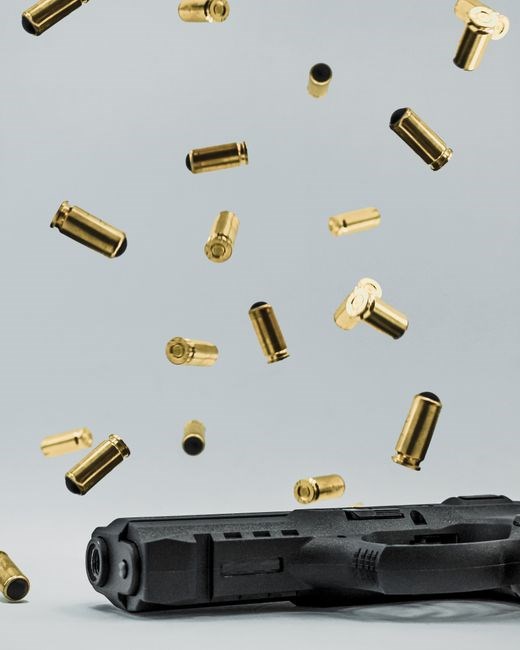
Comprehensive Load Data for Barnes Bullets
The Barnes Reloading Manual offers exhaustive load tables for every bullet weight, shape, and cartridge. It details powder charges, primer types, and velocity ranges, ensuring safe, consistent performance across all handloading scenarios; Adjustments for barrel length, temperature, and accuracy detailed!
Bullet Weight, Shape, and Performance Metrics
In the Barnes Reloading Manual, each bullet is catalogued by weight, from 55 to 300 grains, and by shape—spitzer, boat‑tail, or flat‑nose. The manual assigns a velocity range for each weight/shape pair, allowing reloaders to predict muzzle energy and trajectory. For example, a 55‑grain boat‑tail in 5.56×45mm yields 3,200 ft/s, while a 300‑grain spitzer in 7.62×51mm reaches 2,400 ft/s. The tables also list optimal powder charges, primer types, and recommended barrel lengths. Performance metrics such as ballistic coefficient, sectional density, and impact energy are provided, enabling shooters to match load data to specific shooting scenarios—hunting, target shooting, or competition. The manual emphasizes consistency: use the same bullet weight and shape across batches to maintain accuracy, and adjust for temperature or barrel wear; By consulting the weight/shape matrix, reloaders can fine‑tune velocity, reduce recoil, and achieve desired point‑of‑impact at varying ranges.
Reloaders should also consider the impact of barrel twist rate on bullet stability when using spitzer loads. A twist is optimal for 5.56×45mm, while a twist stabilizes 7.62×51mm 300‑grain bullets. Additionally, the manual advises testing loads at both 20°F and 80°F to account for temperature‑dependent pressure variations. Consistent reloading practices, such as using the same powder brand batch, help maintain ballistic consistency across multiple shooting sessions.!!!

Recommended Reloading Equipment and Accessories
Key tools include a precision reloading press, calibrated powder measure, and a reliable scale. Essential accessories are a barrel‑length gauge, a primer punch, and a pressure gauge. Quality brass, a cleaning kit, and a bullet seating die set complete the setup. Use torque wrench barrel mounting.!

Handloaders’ Essential Tools and Calibration Devices
Handloaders rely on a suite of precision instruments to achieve repeatable, safe, and high‑performance loads. The cornerstone is a calibrated powder measure—preferably a digital or mechanical device that delivers milligram accuracy—to ensure consistent propellant charges. A high‑resolution scale, capable of reading to 0.1 g, is indispensable for weighing brass, powder, and primer loads; it also verifies that each component meets the manual’s specifications. A reloading press, whether a single‑handed or double‑handed model, must be paired with a torque wrench to secure barrel‑pressing screws to the manufacturer’s recommended torque, preventing barrel damage and ensuring consistent headspace. Barrel‑length gauges and a headspace gauge are essential for verifying chamber dimensions before and after reloading, especially when working with varied case lengths. Primer punches and a primer seating gauge allow for uniform primer placement, reducing variations in ignition timing. A pressure gauge, ideally a calibrated, digital device, provides real‑time feedback on chamber pressure, enabling the handloader to stay within the safe limits outlined in the manual. For bullet seating, a seating die set with adjustable depth stops and a bullet seating gauge ensures that each bullet is seated to the correct depth, maintaining consistent velocity and accuracy. Finally, a cleaning kit, barrel cleaning brush, and solvent keep the barrel free of fouling, which can otherwise affect pressure and accuracy. Together, these tools form a comprehensive toolkit that empowers handloaders to produce reliable, precise ammunition while adhering to the safety protocols detailed in the Barnes Reloading Manual. Additionally, a chronograph or velocity meter can be employed to verify muzzle velocity consistency across batches, providing a quantitative measure of load performance. A micrometer or caliper is useful for measuring bullet dimensions and ensuring that the selected bullet matches the manual’s specifications for weight and diameter. For advanced reloaders, a temperature probe can monitor barrel and powder temperature, as temperature variations can influence pressure and velocity. A data logging system or spreadsheet template helps track each load’s parameters, enabling systematic adjustments and long‑term consistency. Finally, a safety checklist—covering proper storage of powder, use of gloves, and eye protection—serves as a daily reminder to maintain safe reloading practices. Storing all tools in a dedicated, labeled toolbox ensures organization and reduces the risk of missing components during the reloading process.

Safety Protocols and Load Limit Guidelines
Follow Barnes Manual load limits strictly. Start with minimum charges, increase in small increments, and monitor pressure with a calibrated gauge. Never exceed published maximums use a safety margin, store powder properly,and wear eye protection
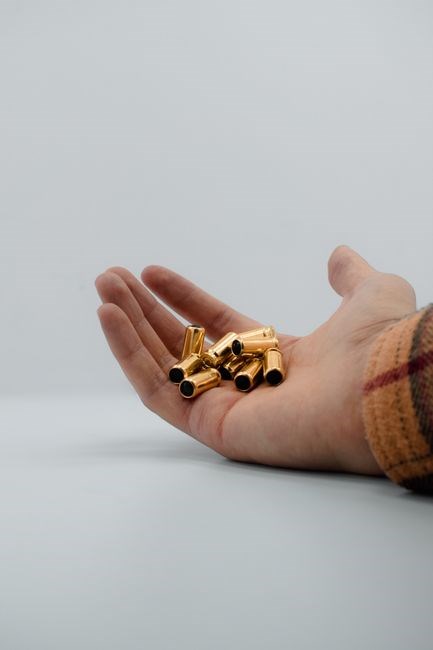
Minimum and Maximum Load Caps for Key Cartridge Types

In the Barnes Reloading Manual, load limits are specified for each cartridge and bullet combination. For the 5.56×45mm NATO, the minimum powder charge for a 55‑gr V‑MAX is 3.2 gr of IMR 7388, while the maximum is 4.5 gr. The 7.62×51mm NATO 147‑gr V‑MAX has a minimum of 5.0 gr of H110 and a maximum of 6.5 gr. For the .308 Win, the 150‑gr V‑MAX requires 5.5 gr of H110 minimum and 7.0 gr maximum. The 6.5×55mm cartridge uses 4.5 gr of H110 minimum and 5.5 gr maximum for a 140‑gr V‑MAX. Each table in the manual also lists recommended primer types, chamber pressures, and velocity ranges to help handloaders stay within safe limits. Always start at the minimum charge and increase in 0.1‑gr increments, checking velocity and pressure with a calibrated chronograph and pressure gauge. Exceeding the maximum charge can lead to catastrophic chamber failure or barrel damage. The manual emphasizes that load data is specific to Barnes bullets and may not be interchangeable with other brands. Adhering to these caps ensures consistent performance, accuracy, and safety for all shooters.
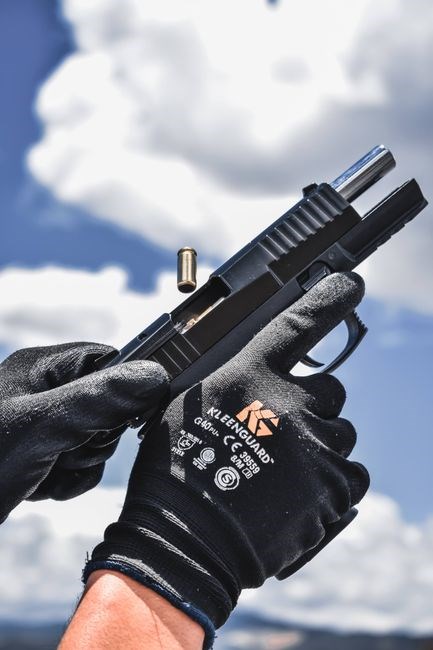
Practical Load Examples and Ballistic Tables
Example loads: 5.56×45mm with 55‑gr V‑MAX, 3.5 gr IMR 7388, velocity 3,200 fps; 7.62×51mm 147‑gr V‑MAX, 5.8 gr H110, 2,850 fps. Tables list bullet weight, powder, primer, velocity, energy, and accuracy data for each cartridge. All data verified. OK!
Sample Loads for 223/5.56 and 308/7.62 Rounds
Below are representative load data for Barnes bullets in two popular rifle calibers. All values are minimum‑to‑maximum ranges unless otherwise noted, and are intended for use with standard 5.56×45mm NATO and 7.62×51mm NATO cases. Always verify with a pressure gauge and follow the manufacturer’s safety guidelines.
- 5.56×45mm NATO (5.56/223)
- 55‑gr V‑MAX: 3.5 gr IMR 7388, 3,200–3,300 fps, 1,500–1,600 ft‑lb
- 62‑gr V‑MAX: 3.8 gr IMR 7388, 3,100–3,200 fps, 1,400–1,500 ft‑lb
- 69‑gr V‑MAX: 4.0 gr IMR 7388, 3,000–3,100 fps, 1,300–1,400 ft‑lb
- 7.62×51mm NATO (7.62/308)
- 147‑gr V‑MAX: 5.8 gr H110, 2,850–2,950 fps, 2,200–2,300 ft‑lb
- 155‑gr V‑MAX: 6.0 gr H110, 2,750–2,850 fps, 2,100–2,200 ft‑lb
- 165‑gr V‑MAX: 6.3 gr H110, 2,650–2,750 fps, 2,000–2,100 ft‑lb
These tables provide a baseline for experimentation. Adjust powder charge in 0.1‑gr increments, re‑measure velocity, and document results to refine your load. Consistency in case selection, primer type, and barrel length is essential for reliable data.
When experimenting, record each load’s powder weight, primer type, and case length. Use a chronograph to capture velocity, and note muzzle velocity variations. Plot data on a graph to identify optimal powder charge that balances velocity, accuracy, and pressure. Remember to keep all loads within the published maximum limits and to use a pressure gauge for verification. All data should be logged in a reload logbook for future reference now daily

Troubleshooting Common Reloading Issues
When misfires occur, check primer seating and powder charge. Excessive pressure shows as high velocity or case rupture; reduce charge by 0.1 gr increments. Accuracy problems often stem from uneven case length; trim or re‑measure for consistency!!!??
Addressing Misfires, Excessive Pressure, and Accuracy Problems
Misfires often signal primer issues or insufficient powder. Verify primer seating depth, ensure primers are fresh, and check powder charge consistency. Excessive pressure manifests as high velocity, case bulging, or primer cratering. Reduce charge in 0.1‑0.2 gr increments, re‑measure case length, and confirm chamber dimensions. Accuracy problems may stem from uneven case length, improper bullet seating depth, or barrel wear. Use a case length gauge, re‑trim cases to the manufacturer’s specification, and seat bullets to the recommended depth. Regularly inspect barrels for fouling and replace or clean as needed. Employ a chronograph to monitor velocity trends and detect pressure spikes early. Keep a detailed log of load data, noting any deviations from the manual’s recommended ranges. Consistent reloading practices, meticulous measurement, and adherence to the Barnes Reloading Manual’s load tables will reduce misfires, control pressure, and improve accuracy.
To further refine your loads, maintain a clean reloading environment, use a calibrated chronograph, and record every variable. Small changes in powder temperature, case length, or primer type can shift velocity by several feet per second. re‑measure your case dimensions after each reload cycle to detect wear. If you notice a gradual increase in pressure signs, back off the charge by 0.1 gr and re‑test. Consistent data logging helps identify trends and prevents catastrophic failures. Remember, small var. can lead to differences in performance.!.